
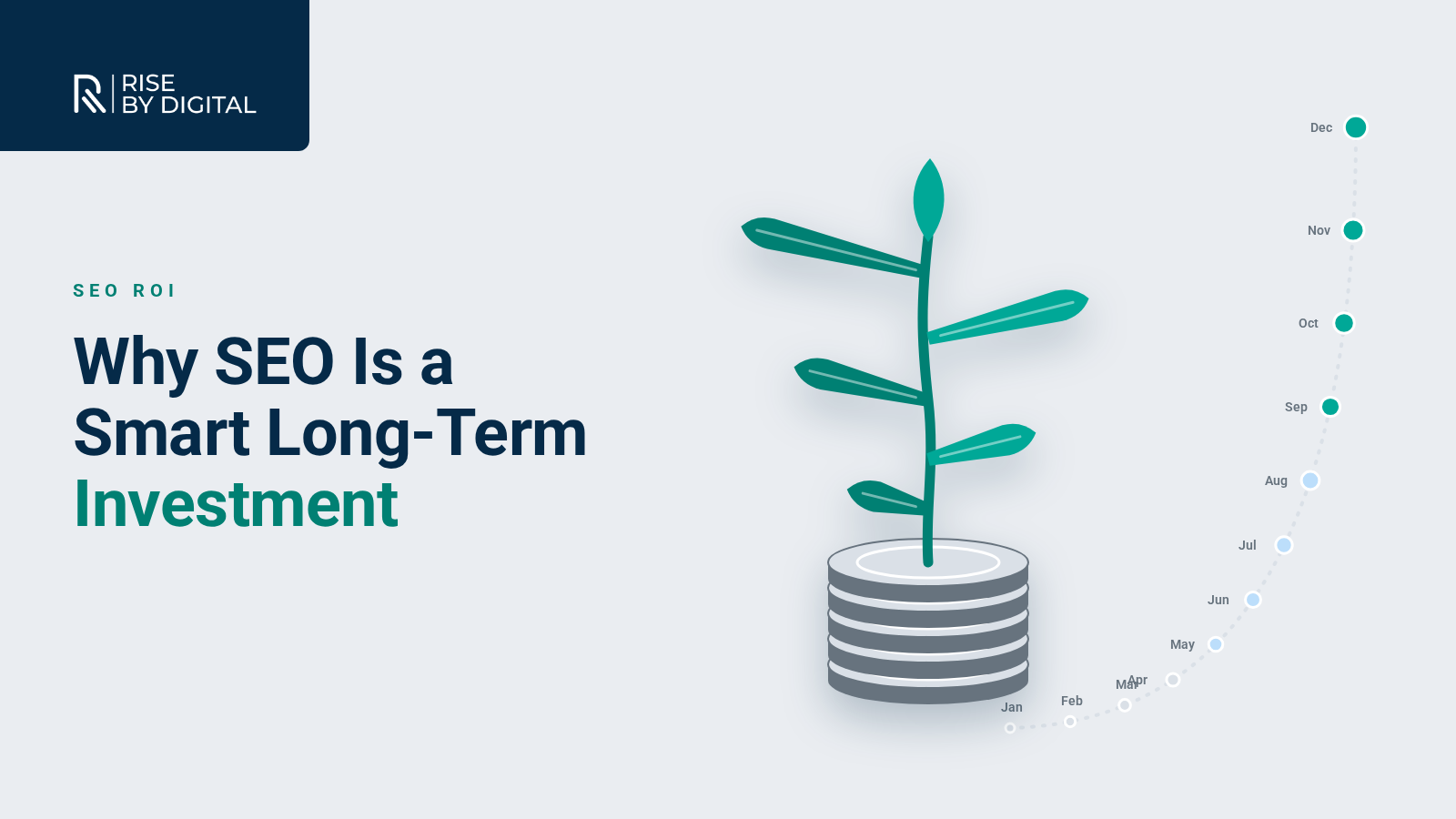
Why SEO can be one of the best-value marketing investments, when it is not the right first move, how long it takes and how to judge whether it is paying off.
Most marketing spend works like a tap: turn it off and the results stop. SEO is different. Done well, it builds an asset that keeps bringing in visitors and enquiries long after the work is done. That is why we describe it as an investment rather than a cost.
Like any investment, though, it is not right for every business at every moment. This guide explains why SEO can be such good value, when it is not the best use of your budget, how long it takes and how to judge whether it is paying off.
What SEO actually involves
Search engine optimisation (SEO) is the work of making your website more useful, more accessible to search engines and more trusted, so it appears when people search for what you offer. If you sell bikes online, that means being visible when someone searches for "BMX bikes" or "kids' bikes with stabilisers". If you are a local accountant, it means appearing for "accountant near me" in your town.
It usually covers three areas: technical health, so Google can crawl and index your pages; content, so your pages answer real questions well; and authority, so other reputable sites and sources point to you. Our guide to understanding SEO explains each in more detail.
Seven reasons SEO can be a great investment
1. The demand already exists
Google says it sees more than 5 trillion searches a year. Many of those are people looking for a product, a service or a supplier. SEO puts you in front of people who are already looking, rather than interrupting people who are not.
2. Results build over time
A well-optimised page can keep ranking for months or years. Each useful page you add, and each reputable link you earn, adds to what you already have. Paid advertising stops the moment you stop paying; SEO tends to fade slowly, which gives you a stronger base each year.
3. You do not pay for each click
With organic search, there is no charge each time someone clicks your listing. Your costs are the work to create and maintain the pages, not the traffic itself. As your organic traffic grows, the cost of each visit and lead tends to fall.
4. Local customers can find you at the moment they are ready
Picture someone visiting a new town and searching "coffee near me" on their phone. They are ready to buy within minutes. A complete Google Business Profile, good reviews and a clear website help a small independent café compete with chains in that moment. Our guide to local SEO shows how.
5. Visibility builds credibility
Appearing again and again for useful questions in your field helps people get to know your business before they ever contact you. A clear, helpful answer to a customer's question shows expertise in a way an advert cannot, and it means the first conversation often starts with trust already in place.
6. It makes every other channel work better
The improvements SEO brings, such as faster pages, clearer content and better structure, also improve your Google Ads landing pages, your social traffic and your email campaigns. And with AI Overviews and AI Mode now part of Google, clear, well-structured content is what gets cited as a source. Google says there are no special requirements for those features beyond normal SEO best practice.
7. You own the asset
Your content and your rankings are not rented from a platform. Algorithms change, but a genuinely useful website remains valuable through those changes far more reliably than any single ad account or social channel.

When SEO is not the best investment
To be fair, there are times when SEO is the wrong first move:
- Nobody searches for what you sell. If you have created a new category, people will not search for it yet. Awareness channels may come first.
- You need leads next week. SEO takes time. For urgent demand, PPC is usually faster.
- Your website cannot convert. More traffic to a confusing or slow site wastes the opportunity. Fix the basics first.
- You cannot commit for long enough. Stopping after two or three months usually means paying for groundwork without seeing the return.
How long does SEO take?
There is no fixed timescale, and anyone who promises one should be treated with caution. Google says changes can take effect in a few hours or take several months, and suggests waiting a few weeks before judging the effect of a change. It also warns that "no one can guarantee a #1 ranking on Google".
In our experience, technical fixes and improvements to existing pages can show earlier movement, while competitive national terms take much longer. Plan to review progress monthly and judge the overall direction over six to twelve months.
How to judge whether SEO is paying off
Rankings are a useful signal, but they are not the goal. Track the numbers that connect to revenue:
- Organic clicks and impressions in Google Search Console
- Organic enquiries, calls and sales in Google Analytics, with conversions set up properly
- Lead quality, by asking your sales team or CRM where good customers came from
- Visibility for your most valuable terms, not just any keyword
Here is an illustrative example, not a forecast. Suppose SEO costs you £500 a month and, after a year, brings in eight extra enquiries a month. If one in four becomes a customer worth £1,500, that is £3,000 of new business a month from a £500 spend. Your figures will differ, but this is the calculation to run, with your own conversion rates and customer values.
SEO or PPC? Usually both
SEO and paid search are often presented as rivals. For most businesses they work best together. PPC delivers visibility straight away and shows you which searches turn into enquiries. SEO takes longer but builds traffic you do not pay for per click. A common approach is to use PPC to cover your most valuable terms while SEO builds, then rebalance the budget as organic rankings grow. The search terms data from your ads also tells you exactly which topics deserve a dedicated page on your site.
If budget is tight and you have to choose, ask yourself one question: do you need enquiries within the next month, or are you building for the next few years? The honest answer usually points to the right starting channel.
Questions to ask before you invest
- What will you do in the first three months, and why?
- How will you report results, and will I see enquiries, not just rankings?
- Do I keep ownership of the content and accounts?
- How do you earn links, and do you ever buy them?
- What is the minimum term, and what happens if I want to stop?
What SEO costs with Rise By Digital
At the time of writing (October 2026), our SEO packages start from £179 a month for local SEO on a 24-month term, or £189 a month on a 12-month term. National SEO packages on a 12-month term range from £459 to £1,699 a month. Every package includes technical SEO, content, backlinking and monthly reporting. If you would like to know where you stand first, our free SEO audit is a good place to start.