
An honest, updated look at Wix: what it does well, the limits that matter for a growing business (templates, portability, time) and how it compares with a professionally built website.
Wix is one of the best-known website builders, and for good reason: you can pick a template, drag elements around and publish a site in an afternoon. But the platform you build on today will shape how your website looks, performs and grows for years, so it is worth choosing deliberately.
We first wrote this post in 2018. A lot has changed since then, including several limitations that Wix has fixed. This updated version gives you a fair, current picture of where Wix works well, where it can hold a business back and how it compares with a professionally designed website.
What you are really choosing between
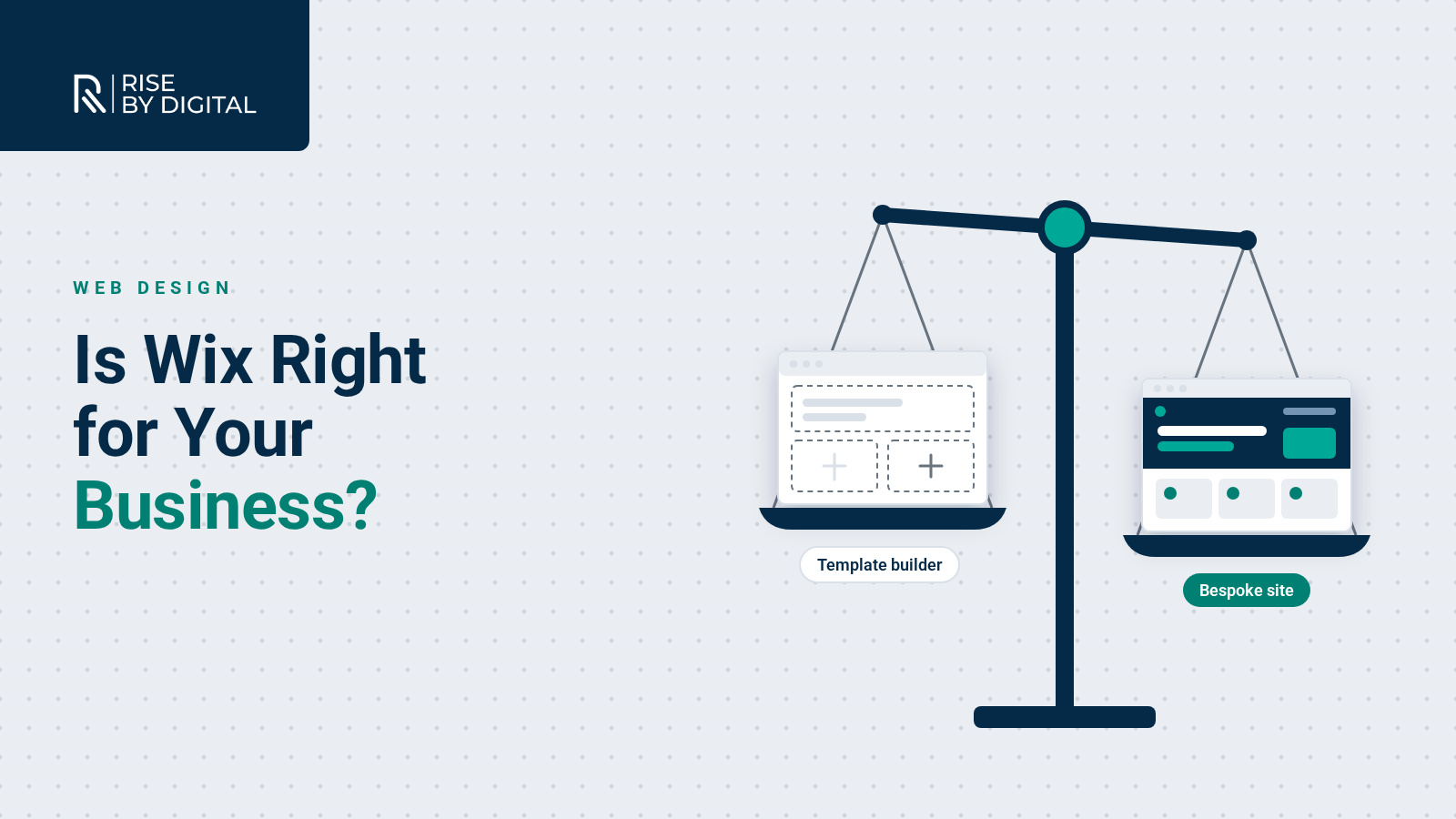
Most businesses are weighing up three options:
- Do it yourself on a builder such as Wix or Squarespace. Low upfront cost and full control, but the design, content, SEO and upkeep are all down to you.
- A professionally built site on an open platform such as WordPress. Higher upfront cost, but bespoke design, more flexibility and content you can move if you ever need to.
- A fully managed service where an agency designs, builds, hosts and supports the site for you.
There is no universally right answer. The best choice depends on your budget, your time, how important the website is to winning business and how much you expect it to grow.
What Wix gets right
- Speed to launch. Templates, a visual editor and built-in hosting mean you can go live quickly.
- Low starting cost. You can build for free and upgrade when you are ready.
- Hosting and security handled. There is no server to manage.
- Better SEO tools than it used to have. Wix now lets you edit page titles, descriptions and URLs, add structured data and customise canonical tags. It also creates and updates an XML sitemap automatically that you can submit to Google Search Console.
For a sole trader who needs a simple, tidy online presence, Wix can be perfectly sensible.
The limitations to know about
The free plan is not really for business
On the free plan, your site lives at an address in the format siteprefix.wixsite.com/siteaddress, shows a Wix banner ad on every page and has limited storage and bandwidth. You cannot connect your own domain without upgrading, according to Wix's guide to building a free website. For any business that wants to look established, a paid plan is effectively essential, so budget for it as an ongoing cost.
Wix also notes that if your premium plan expires, your site reverts to the free Wix address, your custom domain is disconnected and the ads return (Wix: upgrading your site).
You cannot switch templates
Once you have built a site on a Wix template, you cannot change to a different template. To change design, you create a new site and move your content, plan and domain across, as Wix explains in its help article on switching your site template. If you expect your brand to evolve, factor in the effort of a rebuild later.
Moving away is harder than moving in
This is the limitation we would weigh most heavily. Wix states that it is not currently possible to export blog posts to other platforms, and there is no full-site export of your design. If you later move to another platform, pages and posts usually have to be rebuilt or migrated by hand, with redirects set up for every old URL. By contrast, WordPress has a built-in export tool for your content.
Wix blog posts also use a fixed prefix in their URLs (by default /post/). You can rename it, but you cannot remove it, which matters when you plan redirects.
Design and functionality have limits
Templates make it easy to look good quickly, but many businesses end up with a site that looks similar to others in their sector. Custom functionality, complex integrations with your CRM or booking systems, and very specific layouts can be harder or impossible without workarounds or developer tools.
Your time is a real cost
A builder is cheap in money but not in time. Writing copy, sourcing images, setting up SEO, testing on mobile and keeping everything up to date all fall to you. For many business owners, that time is better spent running the business.
What about SEO on Wix?
The old claim that Wix is "bad for SEO" is no longer fair. The platform covers the technical basics, and a well-written Wix site can rank. What matters far more is what you put on it: helpful content that answers your customers' questions, a sensible page structure, fast loading on mobile, a strong Google Business Profile if you serve a local area, and links from reputable sites.
No platform can guarantee a first-page ranking, and Google itself warns against anyone who does (Google: Do you need an SEO?). If search is a major source of customers for you, the bigger question is whether you have the time and know-how to do the ongoing work. Our beginner's guide to SEO explains what that involves.
Wix vs a professionally built website
Wix may suit you if
- You are just starting out and need something simple live quickly.
- Your site is a basic brochure with a handful of pages.
- You are comfortable doing the design, writing and upkeep yourself.
- You do not expect to need custom features or to move platform.
A professionally built site may suit you if
- Your website is a key source of enquiries or sales.
- You want a design that reflects your brand, not a template.
- You need integrations, custom functionality or an online shop that will grow (see our guide to ecommerce platforms).
- You want to own your content and be able to move it.
- You would rather spend your time running the business.
How much does a professional website cost?
Prices vary widely between agencies, so ask exactly what is included. You can see our current website packages and prices on our website design page. Larger sites are priced by the number of pages and design concepts.
Whoever you choose, check who owns the site and its content, what happens to hosting if you leave, and how easy it will be to make your own updates.
Questions to ask before you choose
- What is the website for: credibility, enquiries, bookings or online sales?
- How much time can you realistically spend building and maintaining it?
- Will you need features that a template cannot provide?
- What will the platform cost each year, not just this month?
- How easy is it to take your content elsewhere if you need to?
- Who will handle SEO, security and updates?
So, is Wix right for you?
If you need a simple site quickly, are happy to do the work yourself and do not expect to outgrow it, Wix is a reasonable choice and much improved since we first wrote this article. If your website needs to win business, reflect a distinctive brand and grow with you, a professionally designed site on a platform you can control is usually the better long-term investment.
Already on Wix and wondering whether it is time to move? Our guide on when to redesign your website covers the signs to look for, and you can see examples of sites we have built in our work.