
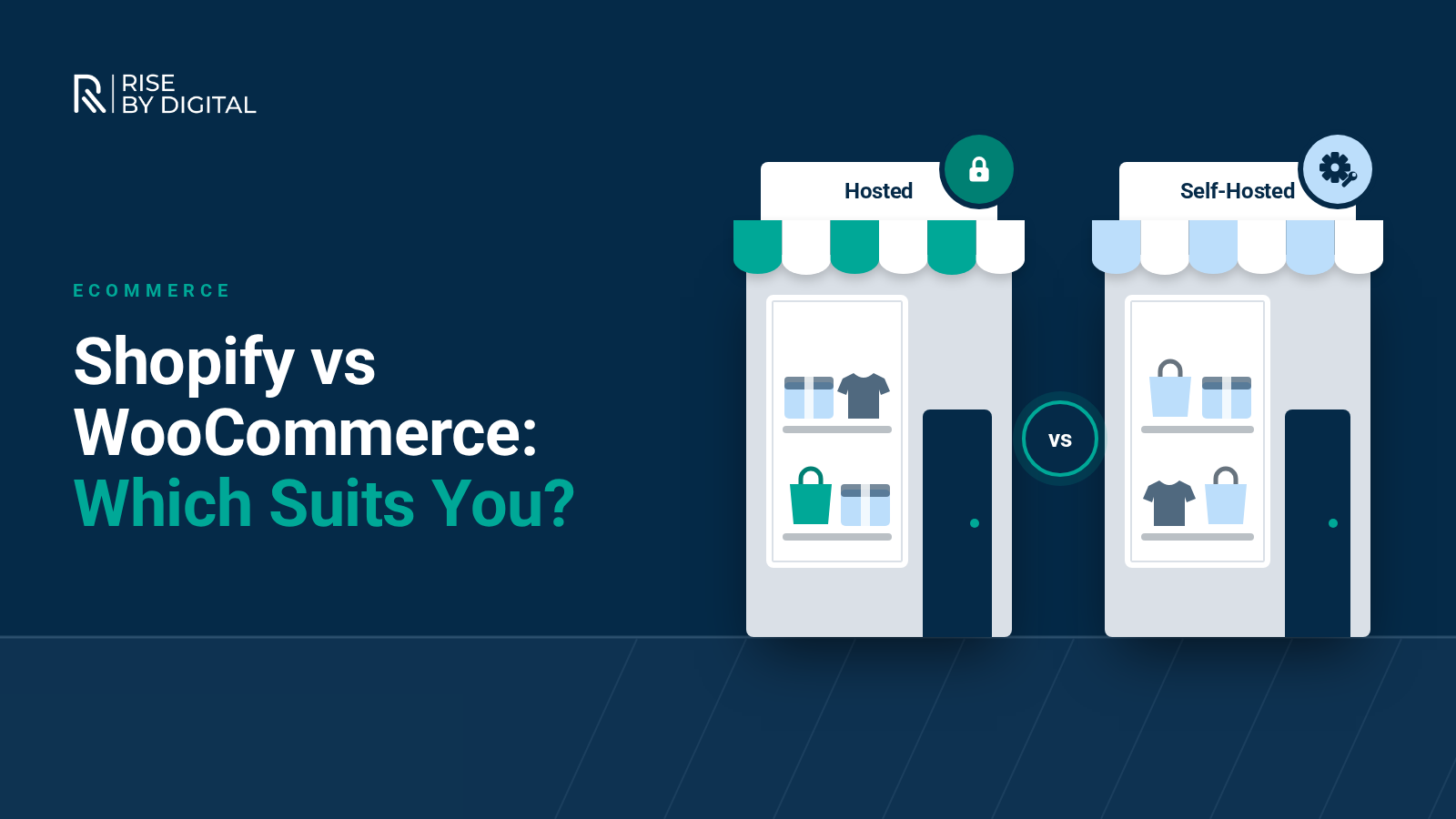
Shopify or WooCommerce? An honest comparison of costs, control and maintenance for UK businesses, plus the alternatives and a checklist to help you choose.
Choosing an ecommerce platform is one of the biggest decisions you will make when selling online. It affects what your shop costs to run, how easy it is to update, which features you can add and how much work falls on you when something needs fixing.
For most UK small and medium-sized businesses, the choice comes down to two platforms: Shopify and WooCommerce. This guide compares them honestly, covers the alternatives worth knowing about and gives you a checklist to help decide. We have updated it for 2026 and removed figures from the original article that we could no longer verify.
The two main options at a glance
Shopify is a hosted platform. You pay a monthly subscription, and Shopify looks after the hosting, security updates and checkout. You build your shop using themes and add features through apps.
WooCommerce is a free plugin that turns a WordPress website into a shop. You arrange your own hosting and maintenance, but you have full control over the code, design and data. WordPress runs around 40% of all websites, according to W3Techs, so there is a huge pool of developers, themes and extensions.
Neither is "best" for everyone. The right choice depends on your products, budget, in-house skills and plans for growth.
Shopify: strengths and trade-offs
What Shopify does well
- Quick to launch. You can have a working shop without arranging hosting or installing software.
- Low maintenance. Shopify handles hosting, platform updates and much of the security work.
- Strong checkout. Shopify's checkout is built in and widely used, with common payment options available.
- Selling in more places. Point of sale, marketplaces and social channels can be connected from the same dashboard.
What it costs
At the time of writing, Shopify's UK pricing is £25 a month for Basic, £65 for Grow and £344 for Advanced when paid monthly, or £19, £49 and £259 a month when paid yearly. Shopify Plus starts from £1,800 a month for larger businesses.
On top of the subscription, budget for:
- Card processing fees, which on the Basic plan start from 2% + 25p per online card transaction with Shopify Payments
- An extra transaction fee if you use a third-party payment provider instead of Shopify Payments, shown as 2% on the Basic plan
- Paid apps for features such as reviews, subscriptions or advanced filtering, which can add up
- A premium theme or custom design, if you want your shop to stand out
The trade-offs
You work within Shopify's system. Most things are possible, but deep customisation may need apps or a Shopify developer, and you are tied to Shopify's pricing and rules. Monthly app costs are the most common surprise for new Shopify merchants.
WooCommerce: strengths and trade-offs
What WooCommerce does well
- Full control. You own the site and its data, and almost anything can be customised.
- No platform subscription. WooCommerce describes itself as having no monthly platform fees.
- Content and commerce together. WordPress is a strong content platform, which helps if blogging, guides and SEO content are central to your marketing.
- Choice of payment providers. You can pick from many payment gateways, and WooCommerce itself does not add a transaction fee on top.
What it costs
The plugin is free, but running a shop is not. Expect costs for:
- Hosting that can handle ecommerce traffic and checkout securely
- Premium extensions for features such as subscriptions, bookings or advanced shipping
- Payment processing fees from your chosen provider
- Maintenance, including updates to WordPress, the theme and plugins, backups and security monitoring
The trade-offs
You are responsible for keeping everything updated, secure and fast. Without regular maintenance, WooCommerce shops can become slow or vulnerable. That is why we pair WooCommerce builds with a hosting and care plan, which covers updates, backups and monitoring.
Shopify vs WooCommerce: a quick comparison
- Ease of use: Shopify is simpler to start with; WooCommerce is familiar if you already use WordPress.
- Control and flexibility: WooCommerce gives you more; Shopify is more structured.
- Running costs: Shopify has a predictable subscription plus apps and fees; WooCommerce costs vary with hosting, extensions and maintenance.
- Maintenance: Shopify handles more for you; WooCommerce needs ongoing care.
- Content and SEO: both can perform well in search when set up properly; WordPress is stronger for content-heavy sites.
- Multilingual and multi-currency: both can sell internationally, using built-in features or add-ons, so check the specific markets you need.
Other platforms worth knowing about
- Wix and Squarespace: website builders with ecommerce features. They can suit very small catalogues and simple shops. Our guide on whether a Wix website is right for you covers the pros and cons.
- BigCommerce: a hosted platform often considered by growing retailers with larger catalogues.
- Adobe Commerce (Magento): a powerful option for large, complex shops, usually with a development team behind it.
- Custom builds: for businesses with unusual requirements, such as complex B2B pricing or deep integration with stock and ordering systems.
Questions to ask before you choose
- How many products and variants will you sell, now and in three years?
- Do you need trade or B2B pricing, customer accounts or quotes?
- Which systems must connect to the shop, such as stock, EPOS, accounting or couriers?
- Will you sell outside the UK, and in which currencies?
- How important is regular content, such as guides and blog posts?
- Who will update and maintain the shop day to day?
- What is your realistic budget for set-up and for monthly running costs, including apps or extensions?
UK essentials, whichever platform you choose
Every platform can handle the basics of selling in the UK, but it is worth checking how each one handles them for your products:
- VAT: prices shown correctly including VAT, and the right rates applied to each product
- Delivery: clear costs and timescales, with integrations for the couriers you use
- Cancellation rights: for most online sales, GOV.UK explains that you must tell customers they can cancel up to 14 days after their order is delivered, so your terms, emails and returns process need to reflect that
- Cookie consent: analytics and advertising tags set up to respect your visitors' choices, as covered in our guide to cookie consent in the UK
- Payment methods: the options your customers expect, such as cards, digital wallets and, where it suits your products, buy now pay later
Getting these right from the start is much easier than fixing them after launch.
Our recommendation in short
Choose Shopify if you want to launch quickly, prefer predictable running costs and would rather not manage hosting or updates.
Choose WooCommerce if you already use WordPress, want full control over design and data, or rely heavily on content marketing, and you are happy to invest in proper hosting and maintenance.
Consider a custom build if neither platform handles your pricing, products or integrations without heavy workarounds.
Getting your shop right
The platform is only the start. Product pages, photography, delivery information, page speed and a smooth checkout all affect whether visitors buy. Our website speed guide and our guide to why website visitors are not converting cover the essentials.
At Rise By Digital, we build ecommerce websites on Shopify, WooCommerce and custom platforms. Our published ecommerce website packages range from £2,495 for up to 25 products to £11,995 and above for larger catalogues, at the time of writing. We will recommend the platform that suits your business, not the one that suits us.