
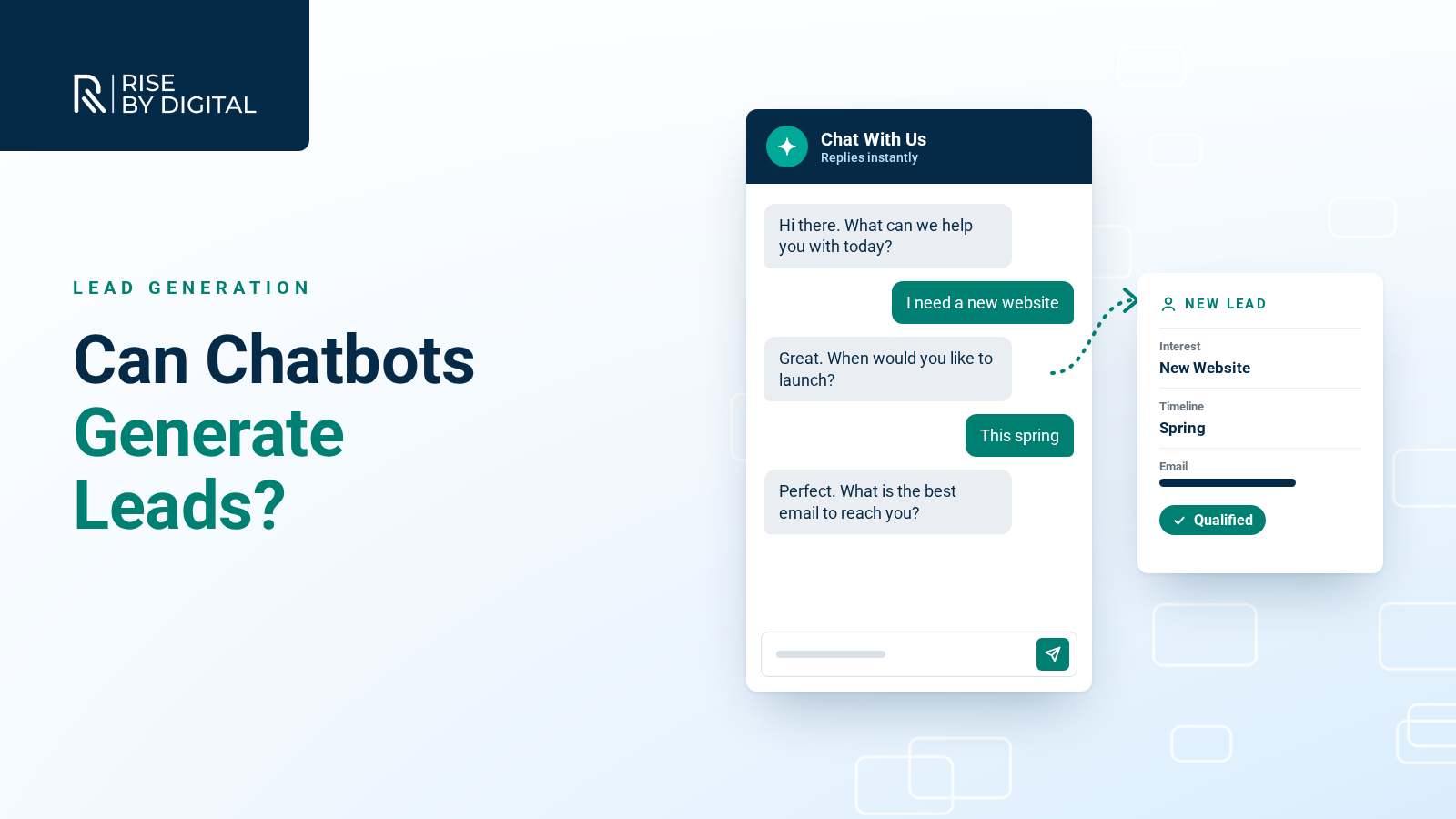
Chatbots can turn more website visitors into enquiries by answering questions, qualifying leads and booking appointments. Here is how they work, where they help and how to set one up well.
Most websites have the same problem: visitors arrive, look around and leave without getting in touch. Some had a question they could not find the answer to. Others were interested but not ready to fill in a form. A chatbot, or AI chat assistant, gives those visitors another way to engage, and that can turn more of them into enquiries.
But a chatbot is not a magic lead machine. Set up badly, it frustrates people and damages trust. This guide explains how chatbots generate leads, where they work best and how to set one up sensibly.
What is a website chatbot?
A chatbot is a chat window on your website that answers visitors' questions automatically. There are broadly two types:
- Rule-based chatbots follow set paths. The visitor picks from buttons or menus ("I want a quote", "Opening times") and the bot responds with pre-written answers or questions.
- AI chatbots use large language models to understand questions typed in natural language and answer them using information you provide, such as your website content, FAQs and help articles.
Many tools combine the two, using AI to answer questions and set flows to collect contact details or book appointments. Most also let a human take over the conversation when needed.
How chatbots generate leads
They answer questions at the moment of interest
A visitor who has a question at 9pm on a Sunday is unlikely to wait until Monday for an email reply. A chatbot can answer straight away, keeping them engaged while their interest is high.
They qualify enquiries
A chatbot can ask a few simple questions, such as what service someone needs, where they are based, their timescale or budget, before passing the lead on. That means your team spends time on the enquiries most likely to become customers.
They capture contact details
When a conversation reaches the point where a human is needed, the bot can ask for a name, email address or phone number and pass the details, along with the conversation, to your team or your CRM.
They book appointments
Many chatbot tools integrate with calendar and booking systems, so a visitor can go from asking a question to booking a consultation without leaving the page.
They reduce friction
Some people would rather type a quick question than fill in a long contact form or make a phone call. Offering chat as an option can bring in enquiries you would otherwise miss.
Where chatbots work best
Chatbots tend to be most useful for businesses that:
- Get a lot of repetitive questions about prices, availability, delivery or opening hours
- Need to qualify enquiries before a sales conversation
- Take bookings or appointments
- Receive a steady volume of website traffic
- Want to offer help outside office hours
If your website gets only a handful of visitors a day, a clear contact form and a well-written FAQ page may be just as effective, and a lot simpler.
Choosing a chatbot tool
There are many chatbot platforms, and the market changes quickly. Some well-known options include:
- tawk.to: free live chat, with optional paid add-ons, including AI features.
- Intercom: a customer service platform whose AI agent, Fin, is charged per outcome alongside per-seat helpdesk plans.
- HubSpot: includes chat and chatbot tools that connect directly to its CRM.
- Tidio and LiveChat: popular with small businesses and online shops.
Prices and features change often, so check each provider's current pricing page before you commit. When comparing tools, look at:
- How easily it connects to your CRM, email platform and booking system
- Whether it can hand conversations over to a person
- How it is trained and how easy it is to control what it says
- How it is priced, for example per seat, per conversation or per resolution
- Where data is stored and how it handles personal information
Setting up a chatbot that helps rather than annoys
Give it good information
An AI chatbot is only as accurate as the information you give it. Make sure your website, FAQs and service pages are up to date, and add clear answers to the questions customers ask most often.
Be clear that it is a bot
Visitors should know they are talking to an automated assistant. Make it easy to reach a person, and tell visitors when they can expect a reply if nobody is available.
Keep it focused
Decide what the chatbot is there to do, for example answer common questions, qualify enquiries and book calls, and set it up for that. A bot that tries to do everything usually does nothing well.
Do not make it pushy
A pop-up that interrupts every visitor the moment they arrive can be irritating. Consider triggering the chat after someone has spent time on a key page, or simply leaving it available in the corner.
Handle data properly
Conversations often include personal information. Update your privacy notice to explain how chat data is used and stored, choose a provider that meets UK GDPR requirements, and only ask for the details you need.
Review conversations regularly
Read through transcripts every week or two. They show where the bot gives poor answers, what visitors are confused about and which questions you should answer more clearly on your website.
Measuring results
Track:
- The number of chats started
- How many chats result in a lead, booking or sale
- How many conversations are handed to a person
- Visitor satisfaction, if your tool offers ratings
- The quality of leads compared with your other channels
Compare these with your enquiry numbers before the chatbot was introduced to judge whether it is genuinely adding value.
So, can chatbots generate leads?
Yes, when they are set up with a clear purpose, accurate information and an easy route to a human. They work best as part of a well-built website that already explains your services clearly. If your site is not converting visitors into enquiries, it is worth looking at the whole journey, not just adding a chat window. Our UX and conversion rate optimisation service can help you find where visitors are dropping off.