
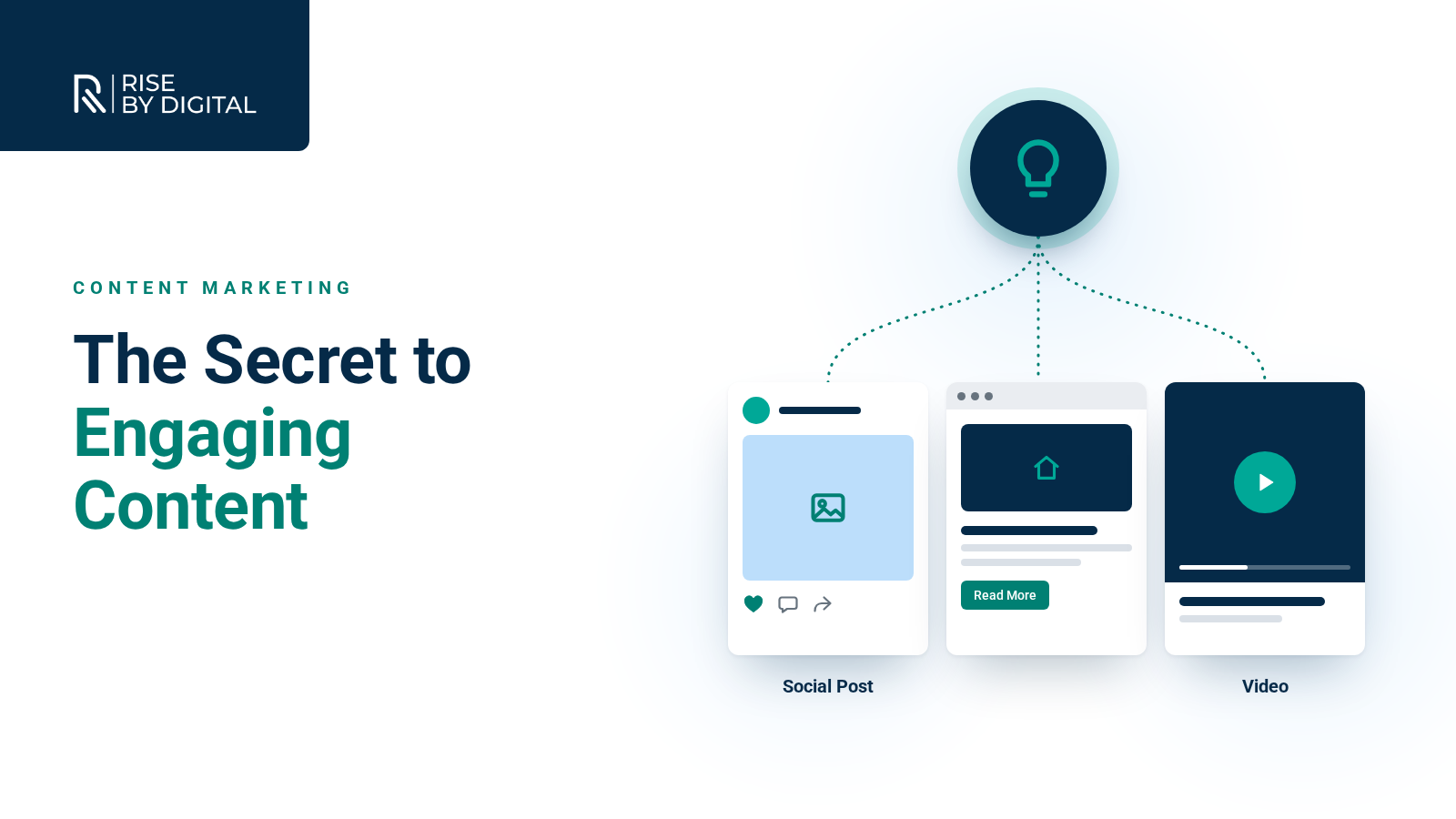
Engaging content is made for a specific audience, platform and purpose. Here is how to adapt your content for social media, your website and video, and how to measure what works.
There is no single trick that makes content engaging. But there is a principle that sits behind most content people genuinely enjoy: it is made for a specific person, on a specific platform, with a specific purpose. A post that works brilliantly on Instagram can fall flat on LinkedIn, and a great blog post rarely works if you simply paste it into a social caption.
This guide looks at what makes content engaging, and how to adapt it for social media, your website and video.
Start with your audience
Engaging content begins with understanding who you are talking to. Before you create anything, be clear about:
- Who they are: their role, their situation and what they care about
- What they need: the questions, problems or goals that bring them to you
- Where they spend time: the platforms and formats they actually use
- What they already know: so you pitch the content at the right level
The best sources are your own customers. Look at the questions people ask by phone and email, the comments on your posts and the searches that bring people to your website in Google Search Console.
Give every piece of content a job
Decide what each piece of content is for before you create it. It might be to:
- Answer a question
- Teach something useful
- Show your work or expertise
- Tell a story about a customer or your team
- Entertain or start a conversation
- Encourage people to take a specific action
Content without a purpose tends to be vague. Content with a clear purpose is easier to write and easier for your audience to engage with.
Adapt content to the platform
Social media
Social feeds move fast, so content needs to earn attention quickly.
- Lead with the most interesting part. On video, Instagram advises hooking viewers in the first three seconds.
- Use the right format. Short vertical video works well on Instagram, TikTok and YouTube Shorts. Carousels and document posts are effective for step-by-step tips. Text and image posts still work on LinkedIn and Facebook.
- Keep captions purposeful. Put the key point first. Longer captions can work when they tell a story, but they need to earn every line.
- Invite conversation. Ask a genuine question, run a poll or ask for opinions. Then reply to the comments you get.
- Show real people. Faces, behind-the-scenes moments and genuine reactions usually outperform stock imagery.
Platforms increasingly reward content that people watch, share and send to friends. Instagram's head, Adam Mosseri, has said watch time, likes and sends are among the most important signals for reach. That favours content people find genuinely useful or entertaining over posts designed purely to chase likes.
Website content
People usually arrive on your website with a question or a task in mind. Engaging website content helps them complete it.
- Answer the question early. Put the key information near the top, with detail below.
- Use clear headings so people can scan to the section they need.
- Keep paragraphs short and use lists where they make information easier to take in.
- Write in plain English. Avoid jargon unless your audience uses it.
- Add examples, photos and case studies from your own work. They build trust and make content more memorable.
- Make the next step obvious, whether that is a related guide, a contact form or a quote request.
Good website content also helps your search visibility. Google's guidance is to create helpful, reliable content written for people first. Our post on why SEO content matters explains why.
Video
Video can explain things faster than text and shows the people behind your business.
- Keep it as short as the message allows. A 30-second tip often works better than a five-minute version.
- Add captions, because many people watch without sound.
- Film in the right orientation: vertical for Stories, Reels, TikTok and Shorts; landscape for longer YouTube videos and your website.
- Focus on value. How-to guides, answers to common questions and behind-the-scenes content tend to perform well.
Tell stories
People remember stories far more easily than lists of features. A simple structure works well for business content:
- The situation: what a customer was dealing with
- The challenge: what was getting in the way
- What you did: how you helped
- The result: what changed for them
Case studies, customer stories and even the story of how your business started can all make content more engaging than describing what you do.
Be consistent, not constant
You do not need to post every day. You need to post regularly enough that people remember you, with content good enough that they are glad to see it. A realistic schedule you can maintain is far better than bursts of activity followed by weeks of silence.
Measure what matters
Engagement is more than likes. Look at:
- Shares and saves, which show content people value
- Comments and replies, which show conversation
- Watch time and retention on video
- Time on page and next clicks on your website
- Enquiries and sales that come from your content
Review your results monthly, make more of what works and drop what does not.
The real secret
If there is a secret to engaging content, it is this: know who you are talking to, give them something genuinely worth their time and present it in the way that suits the platform. Do that consistently and engagement follows.
If you would like help creating content that connects with your audience, our content creation team produces copy, graphics, photography and video for social media and websites.