
How LinkedIn advertising works, what drives the cost, which ad formats to use, who it suits and a checklist to decide whether LinkedIn ads belong in your plan.
When most businesses think about pay-per-click advertising, they think of Google Ads, Facebook or Instagram. If you sell to other businesses, though, there is one platform worth a closer look: LinkedIn. It is the one place where you can target people by their job, their company and their seniority rather than by guesses about their interests.
LinkedIn describes itself as the world's largest professional network, with more than 1 billion members in more than 200 countries and territories. That reach comes at a price, and LinkedIn advertising is not the right fit for everyone. This guide explains how it works, what it costs, which formats to use and how to decide whether it belongs in your marketing plan.
Why consider LinkedIn ads?
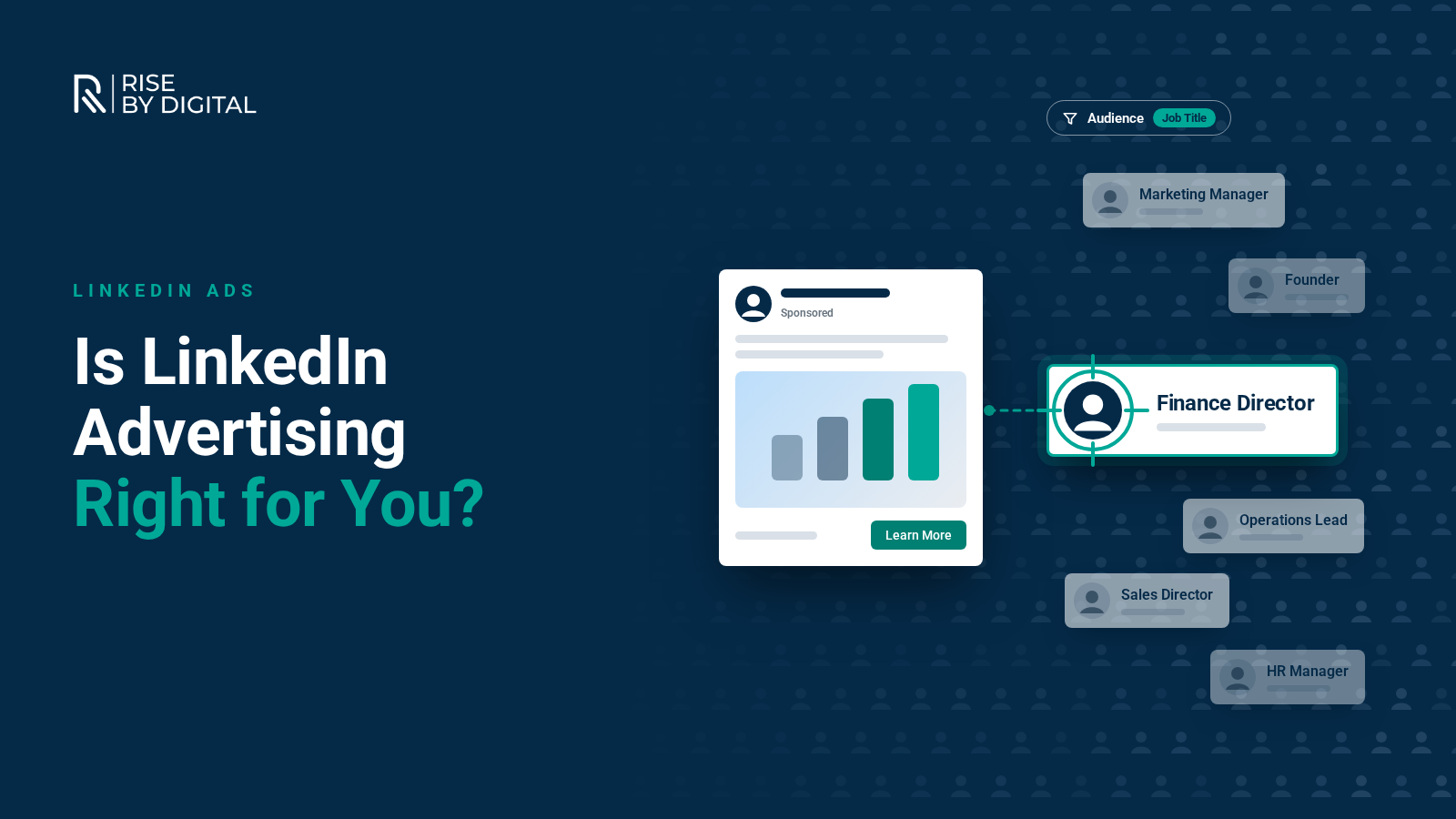
The main advantage is precision. LinkedIn's targeting options are built on the professional details members add to their profiles, so you can reach people by:
- Job title and job function
- Industry and company size
- Seniority, such as manager, director or owner
- Skills and qualifications
- Specific named companies, for account-based marketing
You can also upload a list of target companies or contacts, and retarget people who have visited your website or engaged with your ads. For a B2B firm selling a high-value service, being able to put a message in front of finance directors at manufacturing companies with 50 to 200 staff is something no other mainstream platform offers in quite the same way.
What does LinkedIn advertising cost?
LinkedIn runs an auction, much like Google. You choose an objective, an audience and a budget, and your costs depend on how competitive that audience is, how relevant your ad is and how you bid.
A few points worth knowing before you start:
- There are minimums. LinkedIn's guidance sets a minimum daily budget of $10 (or the local currency equivalent) and a minimum lifetime budget of $100 for new campaigns.
- Daily spend can flex. When you set a daily budget, LinkedIn explains that actual spend on a given day can be up to 50% higher than the figure you enter, while your overall limits still apply.
- Specialist audiences cost more to reach. You are paying to reach a narrow, professional audience, so clicks are rarely cheap.
We have removed the click-price ranges that appeared in the earlier version of this article, because costs vary too much by audience and industry to quote fairly. Instead, check the forecast panel in Campaign Manager for your chosen audience, and judge results on cost per qualified lead rather than cost per click. One genuine enquiry from a decision-maker can be worth far more than dozens of cheap clicks.
The main LinkedIn ad formats
LinkedIn groups its ad formats into a few families:
Sponsored Content
Ads that appear in the LinkedIn feed on desktop and mobile. This includes single image, video, carousel and document ads, which let people read a guide or report in the feed. Thought Leader Ads let you sponsor posts from individuals, such as your founder, which often feel more personal than a company post.
Lead Gen Forms
Forms that open inside LinkedIn and can be pre-filled from a member's profile, so people can request a callback or download a guide without leaving the platform. Lead Gen Forms are usually the most practical starting point for B2B lead generation.
Sponsored Messaging
Message Ads and Conversation Ads arrive in members' LinkedIn inboxes. They can work well for event invitations or high-value offers, but they are intrusive by nature, so use them sparingly and make the message genuinely useful.
Dynamic Ads and Text Ads
Dynamic Ads are personalised using profile data such as company name or job title, and include formats for growing page followers. Text Ads are simple self-serve ads on desktop that are quick to set up and useful for testing messages.

Who benefits most from LinkedIn ads?
LinkedIn advertising tends to work best for:
- B2B companies that need to reach specific decision-makers
- High-value services and products, such as consultancy, software, professional services, training or commercial contracts
- Recruitment and employer branding, where you want to reach people with particular skills
- Firms building authority through thought leadership, events and reports
It is usually a poor fit for low-cost consumer products, such as fashion or homeware. If a sale is worth £30, paying to reach a professional audience rarely adds up. In those cases, Meta, TikTok or Google are likely to give better returns.
How to set yourself up for success
Get tracking in place first
Install the LinkedIn Insight Tag on your website before you spend anything. It lets you measure conversions, build retargeting audiences and understand who is visiting. Make sure it respects your cookie consent set-up, as covered in our guide to cookie consent and analytics in the UK.
Choose one goal per campaign
Decide whether a campaign is for awareness, website visits, leads or event sign-ups. Trying to do everything at once makes it hard to judge results.
Do not narrow your audience too far
Precise targeting is tempting, but very small audiences can struggle to spend and become expensive. Start with a sensible core audience and use the forecast in Campaign Manager to check its size.
Offer something worth swapping details for
A "contact us" ad rarely performs well with cold audiences. A useful guide, checklist, benchmark report or webinar gives people a reason to engage before they are ready to buy.
Follow up quickly
Leads from LinkedIn are often busy professionals. Connect your forms to your CRM or email, and get back to people while the enquiry is fresh.
Measure quality, not just volume
Track how many leads become sales conversations and customers. That is the only fair way to compare LinkedIn with other channels.
Refresh your creative
LinkedIn audiences are smaller than consumer audiences, so the same people see your ads more often. Rotate new images, messages and offers regularly.
A quick checklist before you start
- Is your average customer worth enough to justify a professional audience?
- Can you describe your buyer by job title, industry and company size?
- Do you have an offer, such as a guide or consultation, that suits a cold audience?
- Is the Insight Tag installed and working with your consent banner?
- Can you commit a test budget for at least two to three months?
- Do you have a process to follow up leads quickly?
If you can tick most of these, LinkedIn ads are worth testing.
How Rise By Digital can help
We manage paid LinkedIn campaigns as part of our social ads service. Our LinkedIn management is a fixed monthly fee. You can see current packages and prices on our LinkedIn marketing page.
If you want to grow your company page and content without paid ads, our LinkedIn management packages cover that too. Organic content and paid campaigns work well together, because a strong page and active leadership profiles make your ads more credible. Our guide to organic vs paid social media explains how the two fit together.
The bottom line
LinkedIn ads are not about cheap clicks. They are about reaching the specific people who make buying decisions in your market. For B2B and high-value services, that can make LinkedIn one of the most valuable channels in your mix. For low-cost consumer products, your budget will usually work harder elsewhere.